
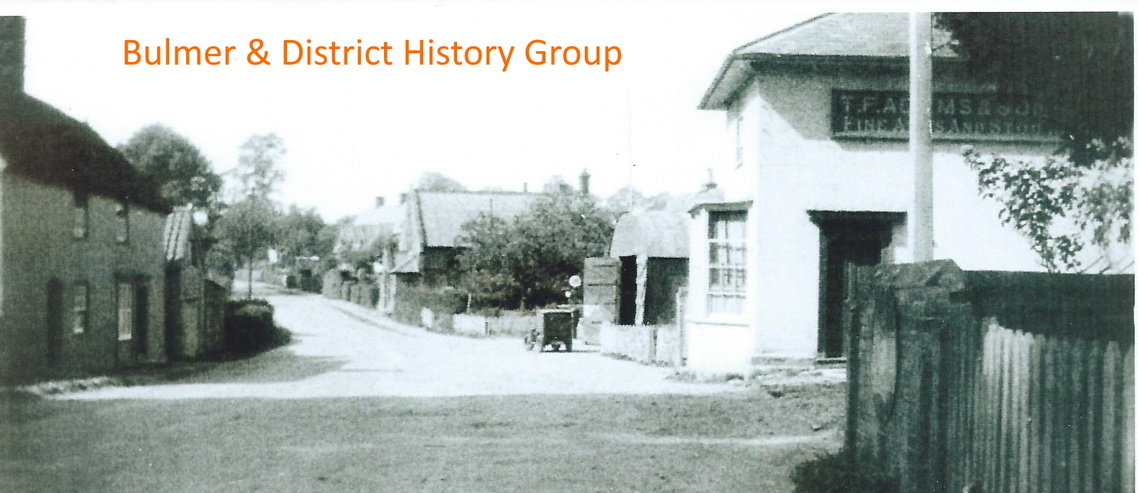
Layout of St. Andrew's 19c
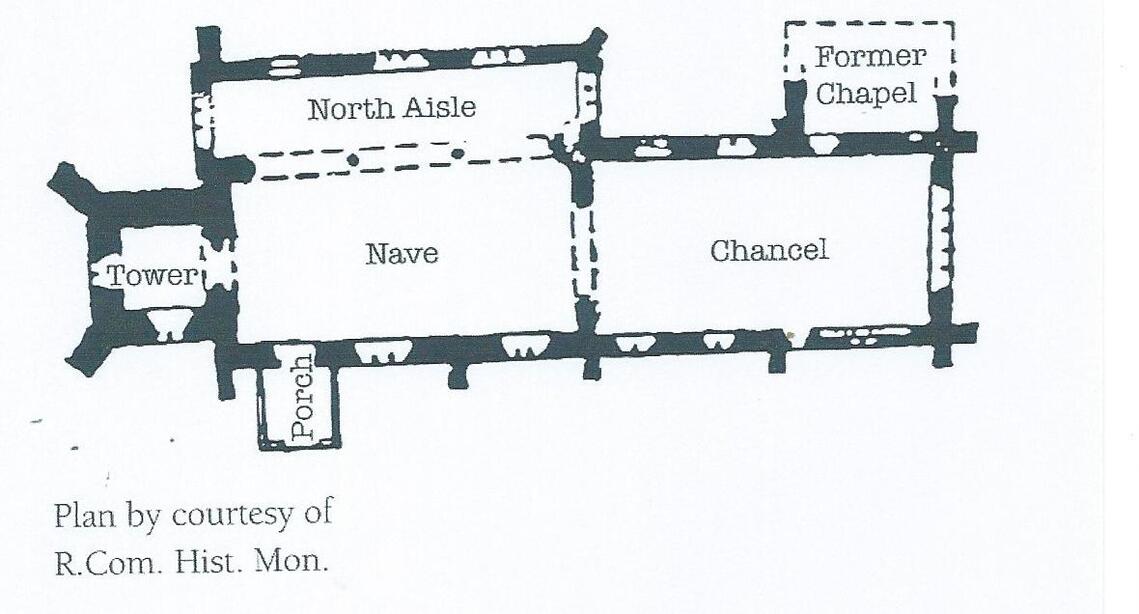
The architect is Mr. E. L. Paraine, of Rathbone Place, London: and Mr. Runnacles, builder, Halstead, has carried out the work of restoration very efficiently, though more requires to be done. The funds have been raised partly by a rate, a donation of £100 from Earl Howe, and partly by voluntary subscription; but prior to the collection at the opening there was a debt of from £70 to £100. The seats in the chancel were presented by Mr. Burke. The church has been closed for several months while the restoration was in progress.
The interior of the church was till recently filled with high square pews, and a gallery blocked up the tower. The chancel was almost hid from the body of the church by a high and very large pew belonging to the Auberies estate. Formerly there were two large pews, one on each side of the chancel, one occupied by the family and the other by the servants; but the late proprietor, C. D. Alexander, Esq. who purchased the estate of Colonel Meyrick, removed one pew and enlarged the other. As it is a "faculty" pew the church authorities have no power to remove it; and Mr. Burke would not consent that it should be alienated from his estate, but the sides have been cut down, and the platform on which it formerly stood, and which was ascended by two steps, has been made level with the floor of the chancel. It has an open fire place at one corner, and is luxuriously fitted up with carpet, cushions, hassocks, etc.
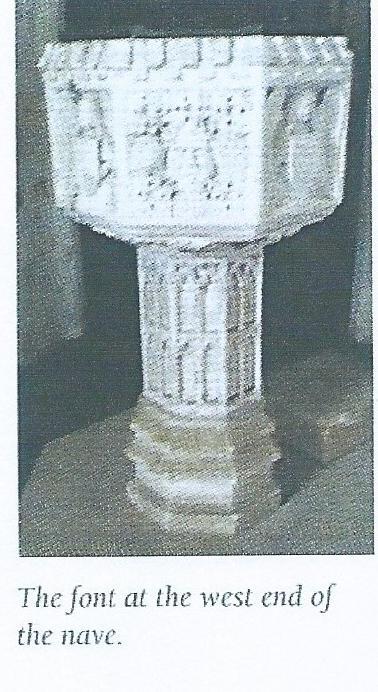
The school children formerly sat in the chancel, but benches are now placed for them at the west end. The small tower is used as a baptistry; there is a fine octagonal font (re-cut), the pedestal covered with raised tracery, and the sides containing cherubs bearing shields, roses, of a mask with grapes, etc..; it stands on a platform, with step, and is covered with an oaken lid. In the tower the bells are rung by a hand machine, but only three of the four can be used.
The building has been re·seated with low, wide, and very commodious benches of pitch·pine, varnished, each provided with a. ledge for books, and cocoa-nut matting for kneeling upon. In the chancel the benches have carved ends, with poppy-heads and kneeling angels. The aisles are paved with red- and-black tiles, and the sacrarium (partly completed) with Minton’s encaustic tiles, in graceful pattens. The communion rail is a simple oaken rod on metal and gilt standards, without doors. The communion table is raised on three steps, and is of open carved work in three compartments, pierced with trefoils below, and worked with the usual ornaments on the ledge above. It is surmounted by a "super-altar," and covered with a plain crimson cloth banging over the sides, edged with fringe. Under the east window is the text, “My flesh is meat indeed, and My blood is drink indeed."
At the sides of the window, in scroll patterns with blue back- ground, are the texts, "’The sacrifices of God are a broken spirit," “The place where Thine honour dwelleth." The old wainscot pulpit (renovated) is placed at the east angle of the nave. On the other side are a plain oaken prayer·desk, facing east, and a lectern, facing west. The three piers in the nave, which have been cleaned and restored, are octagonal, with moulded capitals, the abacus being worked with the scroll moulding, denoting the architectural style of building. The same is used as a string-course inside and outside the chancel, and as a hood moulding over several of the windows externally.
The pier arches are plain, without labels, and merely chamfered. The chancel and tower arches are acute pointed. The north door has been closed. There is a decorated north porch, the lower half brickwork, and the upper of open woodwork, with carved barge board, etc.., but much mutilated. There is also a south porch, which is the principal entrance, and from which there is a descent of two steps into the church. The chancel and nave are on the same level. The windows on the north side of the nave are plain perpendicular ones, with segmental arches; and on the south side there are two fine perpendicular windows, with transoms. The chancel windows are of the Decorated style of two lights, with dripstone outside, and corbel heads. The east window is a very large and low opening of five lights, without tracery, the mullions merely crossing at the head, forming what are technically termed "eyes.” according to the late Early English or Early Decorated style. At the east end the buttresses are placed at right angles, and have but little projection. The Sedalia one of the finest in the county; it is decorated in five compartments, separated by circular shafts, with moulded caps and tracery in the spandrils of the arches above. The upper compartment has a water·drain, and was used as a piscina, and very likely the second as a credence shelf; the three others have lower openings, and were used for the priest’s seats. The well-worn staircase to the rood·loft (now removed) remains, but there is no door below. The roof ofl the chancel is high pitched or six bays, separated by principals, with carved figures, near the wall plates, holding shields, several in the attitude of benediction, one bearing a cross, one a ladder, etc.. The roof is painted blue, and the two eastern most bays studded with gilt stars. The roof of the nave is slightly tinted. There is no vestry. There are several mural tablets on the walls in the Grecian style to the memory of the Andrews and Badham families, etc.. Formerly there was a large black slab in the middle aisle, near the reading·desk, "In memory of Wm. Brage, of Grandon Hall, who died in May, 1700 ;" and to his son and daughter.